
Investment Plan for Europe goes global: China announces its contribution to #investEU

index

At the High Level Economic and Trade Dialogue in Beijing today, China announced its intention to contribute to the Investment Plan, as well as closer cooperation with the EU on investment issues in general.
Today during the High Level Economic and Trade Dialogue in Beijing, Vice-Premier Ma Kai informed Commission Vice-President Jyrki Katainen that China will contribute to the Commission’s €315 billion Investment Plan for Europe. China is the first non-EU country to announce its contribution to the Plan.
As well as this announcement, the two sides agreed to set up a joint working group to increase cooperation between the EU and China on all aspects of investment. The working group will include experts from China’s Silk Road Fund, the Commission, and the European Investment Bank (EIB). The EIB, the Commission’s strategic partner in the Investment Plan, was also represented at the HED in Beijing.
The European Commission and the Chinese government also signed a Memorandum of Understanding on the EU-China Connectivity Platform to enhance synergies between China’s “One Belt One Road” initiative and the EU’s connectivity initiatives such as the Trans-European Transport Network policy.
The Platform will promote cooperation in areas such as infrastructure, equipment, technologies and standards. This will create multiple business opportunities and promote employment, growth and development for both sides, and it will be done in cooperation with the EIB. Finally, the EU encouraged deepened collaboration between China and the European Bank for Reconstruction and Development (EBRD), including the examination of a possible membership in the EBRD in line with its rules.
Vice-President Katainen, responsible for Jobs, Growth, Investment and Competitiveness,
said: “After a very constructive dialogue with Vice-Premier Ma Kai today, we have produced some real results for the future of EU-China cooperation in investment. This is the right moment to invest in Europe, and I am delighted that China has announced its intention to contribute to the Investment Plan. I am confident that other institutional investors will follow. We want to deepen our economic relations with China in the context of the Investment Plan, as well as the One Belt One Road initiative, to promote connectivity between EU and China.”

EU Commissioner for Transport Violeta Bulc added: “I very much welcome the establishment of the EU-China Connectivity Platform. I am confident that it will bring significant benefits to both sides by exploring synergies beteen our respective infrastructure and investments plans and policies, as well as by providing business opportunities that will promote employment, growth and development in our
countries“.
The High Level Economic and Trade Dialogue in Beijing follows the EU-China Summit which took place in Brussels on 29 June at which the two sides agreed to cooperate closely on investment, connectivity, the digital economy and low carbon investment. The HED advanced on the Summit commitment to converge on the scope of the bilateral investment agreement negotiations and produce a joint draft text by the end of the year. In Beijing, Vice-President Katainen was joined by Günther Oettinger, European Commissioner in charge of Digital Economy and Society, who successfully concluded a new agreement on 5G; and Commissioner Bulc, who held talks on transport infrastructure investment cooperation.
Background
The Investment Plan for Europe has three objectives: removing obstacles to investment by deepening the single market, providing visibility and technical assistance to investment projects, and making smarter use of new and existing financial resources. According to European Commission estimates, the Investment Plan has the potential to add at least €330 to €410 billion to the EU’s GDP and create 1 to 1.3 million new jobs over the coming years. It aims to address the current situation where the EU has IP/15/5723
sufficient liquidity, but private investors are not investing at the levels needed. For more information, see this factsheet.
On 28 May, just four and a half months after the Commission adopted the legislative proposal on 13 January, EU legislators reached a political agreement on the Regulation for European Fund for Strategic Investments (EFSI) which is the heart of the EU’s Investment Plan. On 22 July, the Commission agreed on a package of measures that will allow the EFSI to be up and running by early autumn.
In line with the European Council conclusions of December 2014, which invited the European Investment Bank (EIB) Group to “start activities by using its own funds as of January 2015”, the EIB has already approved several projects to be pre-financed in the context of the Investment Plan for Europe, in which it is the Commission’s strategic partner.
To date, nine EU Member States have announced contributions to the Investment Plan: Germany (€8 billion), Spain (€1.5 billion), France (€8 billion), Italy (€8 billion), Luxembourg (€80 million), Poland (€8 billion), Slovakia (€400 million), Bulgaria (€100 million) and the UK (£6 billion/around €8.5 billion). Vice-President Katainen has travelled to 27 of the 28 EU Member States on the Investment Plan roadshow (Slovenia is the final stop on 9 October).
Useful links:
Investment Plan for Europe – Questions and Answers
Factsheet on HED EU-China Investment Cooperation
Press release on 5G agreement
Investment Plan Website
#investEU on Twitter
Press contacts:
Annika BREIDTHARDT (+ 32 2 295 61 53)
Siobhan BRIGHT (+32 2 295 73 61)
General public inquiries: Europe Direct by phone 00 800 67 89 10 11 or by email

http://trade.ec.europa.eu/doclib/docs/2015/october/tradoc_153844.PDF

Assessing the Final Clean Power Plan

images

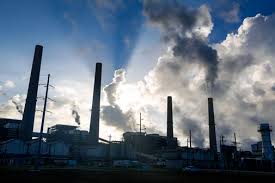
On August 3, 2015, the Environmental Protection Agency released the final Clean Power Plan (CPP), a regulatory action under the Clean Air Act (CAA) that establishes guidelines for states to limit carbon dioxide emissions from existing power-generation units. The plan differs in a number of important ways from a draft version released in June 2014. This research note, the first in a series on the final CPP from CSIS and Rhodium Group, outlines the key changes between the draft and final rules and analyzes the impact of those changes in terms of stringency—that is, the emission reductions required by the rule. A few key takeaways:

• The final rule adheres more closely to traditional regulatory approaches under the CAA’s Section 111 and eliminates some of the more novel regulatory proposals of the draft rule.

• The rule retains significant flexibility for states to craft an implementation plan tailored to their specific circumstances.

• In aggregate, the emission-performance targets that states are required to achieve in 2022 are higher than in the draft rule but the 2030 standard is stricter compared to the draft. This may lead to higher cumulative greenhouse gas emissions compared to the draft; however, ultimate emissions reductions and energy-sector impacts are highly dependent on state-level implementation decisions as well as technology and fuel costs. […]

Read the full report with CSIS here [PDF]

Investments in China: the importance of culture and language

images

A direct testimony of a Spanish manager doing business in China: “no one could understand the Chinese culture without studying  their traditions”.

Everybody knows that culture and language affect the way we do business and the way we consider our investments, even inside the same country, like Spain (for example, the Catalans  and  the Andalusians) but this is very obvious in China.

China – and the Chinese world – has a culture with an enormous tradition that has developed in an almost independent way from ours in the West. China has been in contact with several cultures  in Asia, like Persia and other Southeast Asian countries but especially with India from where they received a big influence in the fourth century through Buddhism. The other major influence has been the West specially in the 19th Century.

So this Chinese civilization, that has been developed independently (in a certain way)  from our civilization, has a very original language. I think that this is a very important aspect because the language is the most important vehicle to express oneself.  So, there are many aspects in this culture that will be presented in a very special and different way and of course  in today´s world this will also affect the investments we make.

The well known French sinologist Marcel Granet  tried once to explain to some Chinese students coming to France (in the 1940´s) “Discourse de la Methode”,  is a very neutral text with quite simple and general human ideas. But he discovered that after a few minutes of explanation, the Chinese where completely lost, it was a completely foreign domain for them.

But it works both ways, meaning that no one could understand European culture without studying  our philosophy and traditions going back to the Greek philosophers and no one could understand the Chinese culture without studying  their traditions, philosophy and way of thinking  going back to several centuries before our era.

So that means that our historic trajectories, our references, our socio-political realities are different and therefore, everything that might look identical in European and Chinese cultures turns out to be very different when we analyse it more deeply.

The importance of knowledge, its history and the way we acquired it in our lives is very important in every civilization.

In China for instance, Confucianist ideology has been transformed continuously, especially after the 12th century into what has been called  the NeoConfucianism  and this transformation is related very closely to all aspects of society, politics and history. In this sense, concepts have changed continually since they first arose throughout all the dynasties but especially during the period of Western influence  in the 19th  and 20th centuries.

There are many concepts in Chinese language and culture that are different from the way we know them in the West. As I already commented to you once, terms and notions about justice, morality, humanity, individual rights, agreements, etc… are not the same. For instance the word  “politics” which comes from the Greek polis and in the West carries the idea of all citizens being represented as aiming for the best way to administrate the city,  in the Chinese language, the term politics ( 政治 ) means “Administration Control”, so the semantics are very different.

So when the leaders of China and the EU meet and talk about politics, most of the time they are talking about their own concept of politics. So this causes many contradictions and misunderstandings. The same goes for business and investments.

All this is to say that we still have a long way to go, especially now that the government of China is trying to expand the “silk road” all over the world and specially to the EU and organizing seminars and forums to invest.

To build a railway from Hong Kong to Lisbon or build a new Euro Asia market is not possible if there is no mutual recognition and harmonisation of regulations, or if we do not have a new approach to standards for unimpeded trade and investment. We need to rely on international standards and semantic concepts: cooperation between companies will only be possible if they can refer to the same standards.

To sum up, investing abroad, building factories and infrastructures is the easy part of connecting China and the EU, but the “software” is where the difficulty lies and language and its semantics  play a very important role.

Jesus Castillo Abascal

Business Development Manager at Solarig Holding S.L.. (see the table below)

Beijing, China

jcastillo@sina.cn

Case studies: European green tech FDI to China


  Beijing Boon Edam
Entrance Technology Co., Ltd.
Exprivia IT Solutions (Shanghai) Co., Ltd. ISG Heating Equipment Co., Ltd. Hamon Thermal (Tianjin) Co., Ltd. Solarig Holding S.L. Alstom Grid China Technology Center Co., Ltd.
Year of establishment 2001 2014 2013 2009 2006 2009
Respondents’ position and nationality Ambassador, Dutch CEO, Italy General Manager, Turkish Sales and Projects Manager (China), Belgian Asia Executive Director, Spanish General Manager, Chinese
FDI entry mode Joint venture Merger & acquisition WOFE Branch JV

(25% Spain-75% Chinese)

WOFE
Turnover  in China (USD) 48,000,000 113,000 3,800,000 90,000,000 55,000,000 N/A[i]
Core business Manuf.
revolving doors
Service: consultancy,
service, information and communication
Manuf.
heating business
Manuf. and services: turnkey
projects, engineering
Manuf. and service: energy plant developer, engineering and operation R&D: applied research, product development, engineering support
Headquarter location Netherlands Italy United Kingdom Belgium Spain France
Chinese location Beijing Shanghai Shanghai Beijing Beijing Shanghai

Source: Vaccarini, Spigarelli and Tavoletti, 2015.

[i] As about the turnover, our respondent representing Alstom Grid China Technology Center Co., Ltd. mentioned the following statement: “Since we are the cost center and focus on R&D activity only, so number is sensitive and it is not allowed to be disclosed”.

Reference

Vaccarini, K., Spigarelli, F. and Tavoletti, E. (2015), “European green tech FDI in China: The role of culture”, c.MET Working Papers 1507, c.MET-05 – Centro Interuniversitario di Economia Applicata alle Politiche per L’industria, lo Sviluppo locale e l’Internazionalizzazione, https://socionet.ru/publication.xml?h=repec:cme:wpaper:1507&l=en.

Overview and Lessons in Central Asia from Investment Disputes under the Energy Charter Treaty – on 23th July 2015

matteo barra

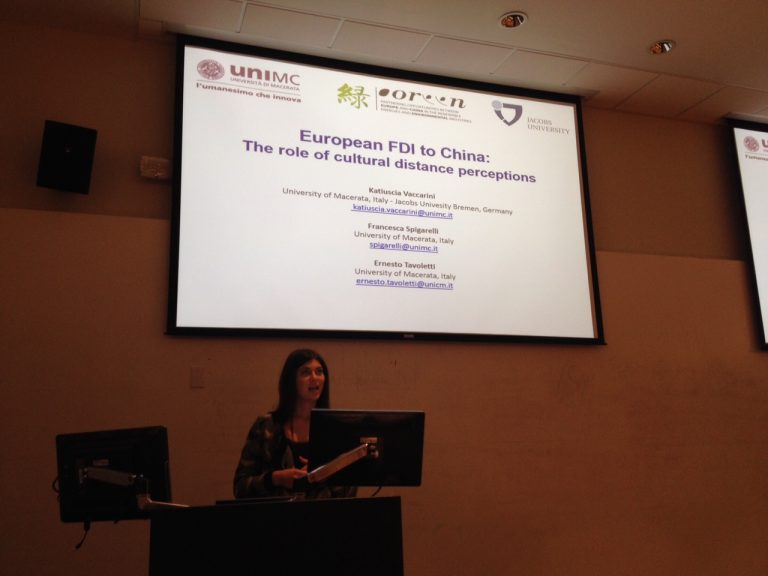
Matteo Barra, Expert Officer on Energy Investments, Energy Charter Secretariat, Bruxelles, “Overview and Lessons in Central Asia from Investment Disputes under the Energy Charter Treaty”. on 23th July 2015.  Introduction and comments from Prof. Paolo Davide Farah (gLAWcal – Global Law Initiatives for Sustainable Development – United Kingdom & University Institute of European Studies, IUSE, Turin, Italy). The event is organized by gLAWcal – Global Law Initiatives for Sustainable Development (United Kingdom) in collaboration with University Institute of European Studies (IUSE) in Turin (Italy) which is beneficiary of the European Union Research Executive Agency IRSES Project “Partnering Opportunities between Europe and China in the Renewable Energies and Environmental iNdustries” – POREEN, coordinated by University of Macerata, Work-package 4. The Program is available at http://glawcal.org.uk/files/Events/Matteo_Barra_23th_July_2015.pdf

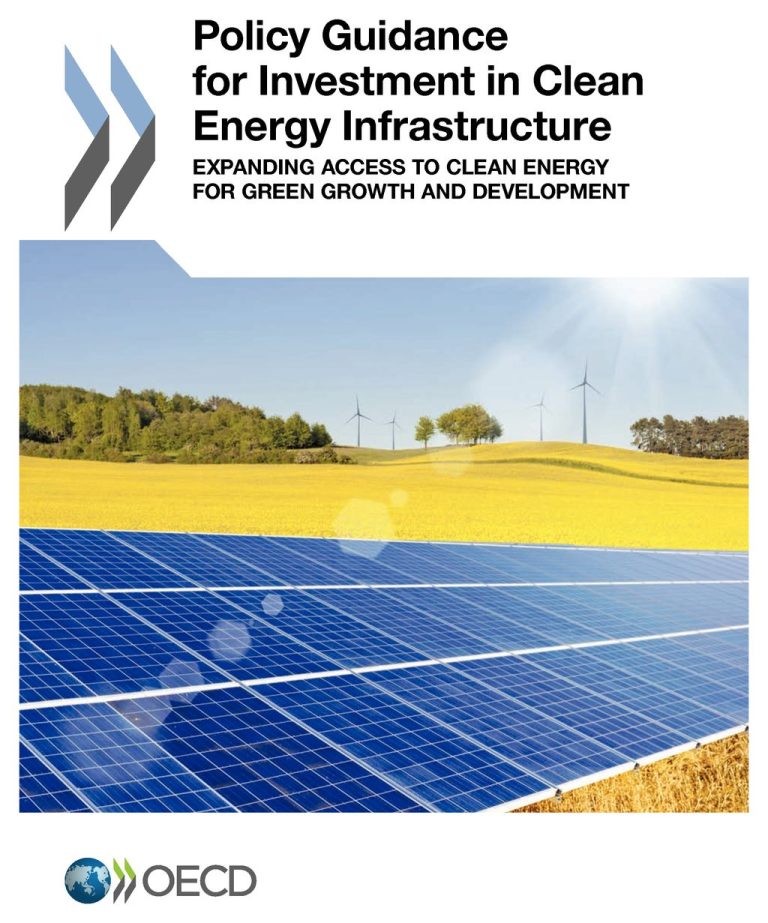
OECD | Policy Guidance for Investment in Clean Energy Infrastructure

OECD | Policy Guidance for Investment in Clean Energy Infrastructure

Expanding Access to Clean Energy for Green Growth and Development

This OECD publication provides guidance on policies that are available to governments to exploit potential of investment opportunities in clean energy infrastructure.

OECD: Policy Guidance for Investment in Clean Energy Infrastructure (link http://www.keepeek.com/Digital-Asset-Management/oecd/finance-and-investment/policy-guidance-for-investment-in-clean-energy-infrastructure_9789264212664-en#page9)

Solar – SPI Solar secures funding from three Chinese banks

0

On March 5, SPI Solar announced strategic cooperation agreements with China Minsheng Bank, China Construction Bank and Suzhou Bank. The three banks will respectively provide credit lines of RMB 7 billion, RMB 2 billion and RMB 1 billion to support project financing, mergers and acquisitions as well as general funding needs. (MorningStar EN)